Fuse, Evolve, Transcend
Wingard AI fuses chip design, EDA, and self-evolving AI agents into a single system — an engine built to carry intelligence beyond the horizon, toward next-generation superintelligence.
Spec to GDS, pursue engineering closure
Starting with MXU systolic arrays, we validate automated generation from spec to GDS, evaluation feedback, and rapid iteration across different parameter configurations. The core question is whether the system can keep reducing engineering time while maintaining controlled evolution in pass rate, coverage, and synthesis quality results.
⟡ Powered by domestic foundation modelsMXU systolic array trials
What we measure — engineering first, not benchmarks
The flow iterates rapidly and evolves itself — every run makes the next one better.
The bottleneck has shifted: no longer model capability, but the efficiency of evaluation feedback.
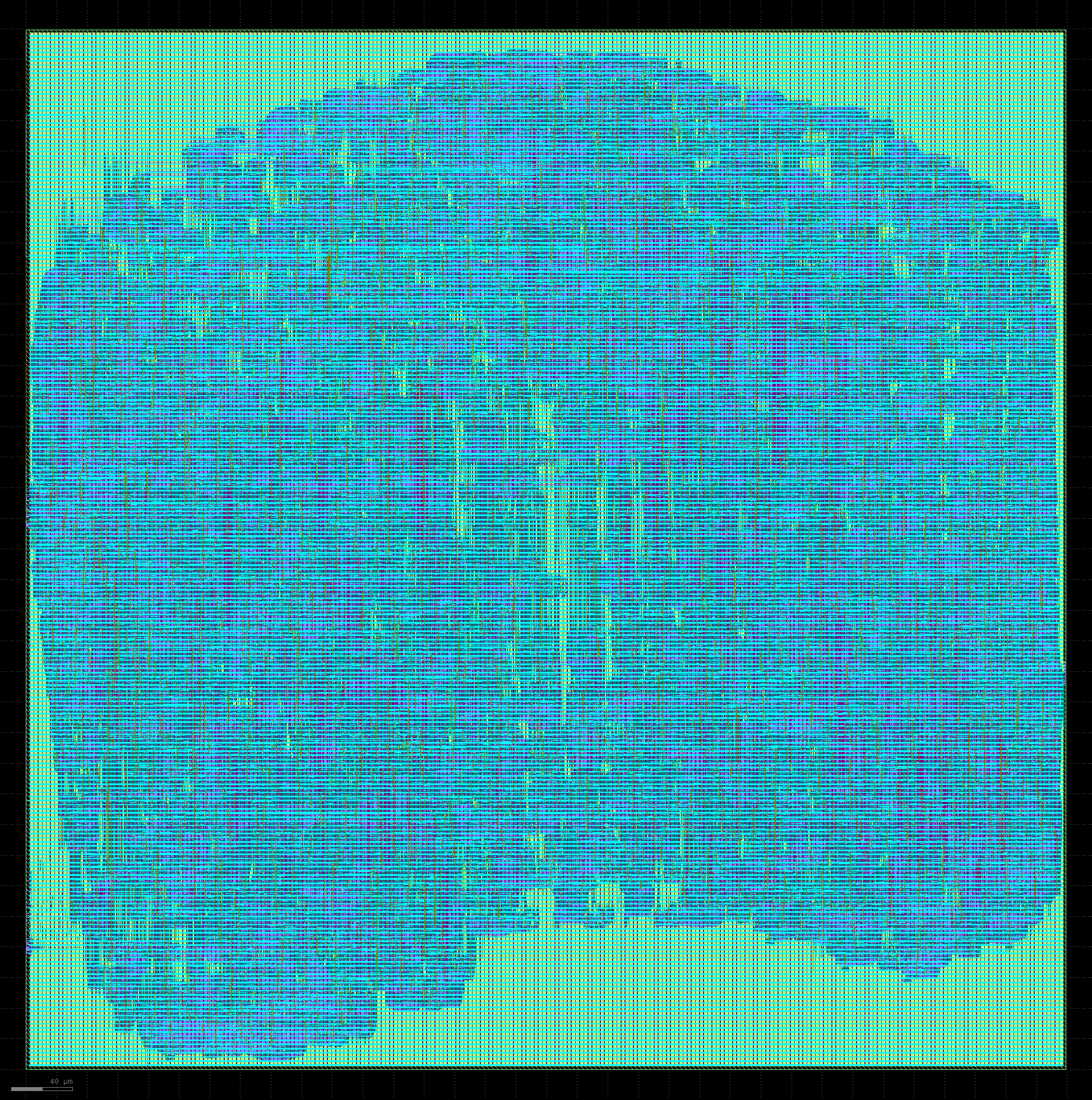
Spec-to-GDS output — a complete chip top-level layout generated through the automated flow. Fmax = 705 MHz · Power = 0.811 W · Die Area = 461,371 µm² (0.68 × 0.68 mm). PPA data obtained using the OpenROAD ASAP7 7nm advanced-node test platform.
Heterogeneous verification at escape velocity
One verification platform spanning GPU, FPGA, and NPU. Where others simulate, we accelerate — three orders of magnitude past open-source baselines.
Trail length on log scale · GPU + FPGA + NPU, unified
One system, deeply fused
Chip development, EDA tooling, and AI agents — not three disciplines stitched together, but one vertically integrated system, compressed until it becomes something new.
Deep vertical integration
Silicon design, EDA tools, and agent design compressed into a single, coherent system — each layer feeding the others.
Self-evolving agent systems
Agents that improve their own workflows: learning from every run of every flow they execute.
New environments & infrastructure
Building the Env & Infra layer — the launchpad that the next generation of intelligence will lift off from.
Recursive self-improvement — systems that optimize themselves, iteration after iteration, until the curve bends upward.
Committed to building a complete AI-autonomous chip development flow, achieving a closed loop of software-hardware co-design and co-evolution.
Three crafts, one crew
Built by people who have shipped silicon, written the tools, and trained the agents.
DesignHouse experts
Veterans of full chip design cycles — from architecture to tape-out.
EDA experts
The people who build the tools that build the chips.
AI agent experts
Researchers and engineers crafting agents that learn, plan, and evolve.